Tuesday, May 15, 2012

Defending from Within - Potassium Iodide


Radiation permeates the spaces in which we live and work.  It bounces off our skin, enters our bodies in food and drink, and even collects in our bones. Usually these ambient radiation levels are low enough to make little difference to our overall health. But in extreme cases of high radiation levels in the environment, steps must be taken to stop radiation from getting inside us. Interestingly enough, there some things we can take into our bodies that can protect ourselves from radiation.  
Potassium Iodide (KI) is a salt that has been used as a tool for radiation protection since the FDA approved it in 1982. The iodine in KI is stable (or nonradioactive) and is an important chemical needed by our bodies to produce hormones. Most of the iodine in our bodies collects in the thyroid, the site of specific hormone production. The danger with this concentration is that radioactive iodine (such as I-131) can be absorbed in place of stable iodine, leading to heightened concentrations of radiation and risk of thyroid cancer. Radioactive iodine is a common isotope given off during nuclear reactions.  Last year’s Japanese nuclear crisis released large amounts of I-131 into the environment. This prompted record-setting sales of KI that suppliers could not keep up with.
65 mg Potassium Iodide Tablets. source
Last month KI came into the international spotlight again when the US Defense Logistics Agency ordered 1,050,000 doses of the pill to bulk up its stockpile1. The reason for the order is probably due in part to increased nuclear threats from North Korea and Iran. In any case, the solicitation prompted massive orders for potassium iodide from spooked civilians. 
Although KI is a useful tool for dealing with exposure emergencies, it isn’t a complete remedy. The compound only lessens health hazards from radioactive iodine, not other radioactive isotopes. Correct dosage is very important as well, as young children need far less KI than adults in emergency situations. For other details, the Centers for Disease Control and Prevention (CDC) has a great page on potassium iodide here.
Perhaps the biggest misunderstanding with potassium iodide is that it doesn’t keep radiation from entering the body, it only reduces the possibility of radioactive iodine being absorbed. That’s why other measures need to be in place to issue advance warnings about radiation threats. Radiation detectors such as the MiniRad-D and Rad-ID as currently used by military, public safety, and homeland security personnel to find and identify radioactive threats. 
 ____________________________________________________________________________
D-tect Systems is a supplier of advanced radiation and chemical detection equipment sold around the world. www.dtectsystems.com.

Friday, May 4, 2012

Radioactive Scrap Metal – a Global Issue


The world is becoming a smaller place. The accelerating pace of technology is pulling people together through communication, travel, business, and industry. Globalization makes it easier to for us to share – a phenomenon with both positive and negative implications. In the great melting pot of world industry, radiation contamination is proving to be an increasingly harmful side-effect. 

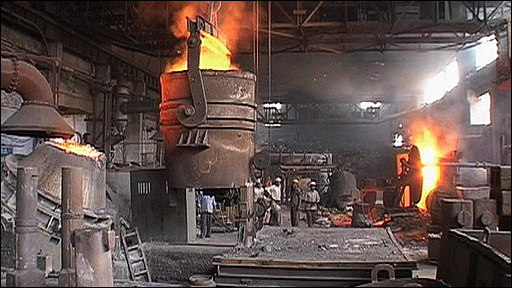
As discussed in the previous post, much of the radiation contamination of consumer goods has been linked to contaminated scrap metal. Metal used in the production of goods comes from a variety of sources and almost invariable contains a large amount of recycled materials – a fact that efficiency and environmental controls demand. The problem is that long-lasting radioactive scrap from sources such as medical equipment, food processing, mining equipment, and even decommissioned power plants, is making its way into smelters. The metal turned out from these contaminated batches spreads to other consumer goods – most of which are never checked for radiation.

A scrap metal foundry.  source

Another aspect that further complicates the scrap contamination problems is size – the scrap metal market is worth over $140 billion1. With so much material in flux, an unreported contamination event can send radioactive material to unknowing manufacturers across the globe.  Although the US has stopped over 120 major radioactive shipments since 20032, there is ample evidence that radioactive scrap is still slipping through the cracks.  For example, a Texas recycling facility accidentally created 500,000 pounds of radioactive steel byproducts after melting metal contaminated with cesium-137 according to U.S. Nuclear Regulatory Commission records for 2006.

Scrap yards and recycling operations truly are the primary line of defense against rogue radiation but most of these facilities are under no specific federal government or state regulations and reporting is often voluntary if problems are found.

We’ve seen the results of contamination close at hand – at a recent visit to the nearby landfill, we were told that almost every load of scrap metal that comes in sets off radiation detectors and has to be scanned a second time.

To aid in this crucial detection stage of industry and commercial operations, D-tect Systems has designed several radiation detectors that are sensitive and easy to mount.  The Rad-D is currently being used in hospitals, factories, embassies, and waste disposal locations.  It can easily be mounted to scan conveyor belts and integrate with existing security systems.  The Rad-DX, D-tect’s newest product, is smaller and more visually innocuous.  The Rad-DX also has novel mesh-networking abilities that allow an operator to monitor multiple radiation detectors in real time or look at past event logs.   
The Rad-D is easily mounted to a wall or pole and monitors for radiation in real time.
  ____________________________________________________________________________
D-tect Systems is a supplier of advanced radiation and chemical detection equipment sold around the world. www.dtectsystems.com.
Friday, April 27, 2012

Radioactive Contamination in Consumer Products

Early this year the home retail chain Bed Bath & Beyond recalled over 200 shipments of a brushed steel tissue box holder.  The stir caused by the recall inspired great headlines like this one from Gizmodo1:

Time to decorate! I'll take this potpourri urn, these palm frond bookends, a nice neutral-colored bathmat, and WHY IS THIS TISSUE BOX EMITTING DANGEROUS RADIATION?!!
The recalled tissue box from Bed Bath & Beyond. source
In reality, radiation contamination in consumer products is no laughing matter, and this is no isolated case.  Contaminated consumer products have been traded between many countries, and a wide range of products have been identified. 
In 2009, Wal-Mart was fined almost $400,000 by the Nuclear Regulatory Committee for exit signs containing radioactive material2.  500 sets of radioactive elevator buttons were found in France in 20083. A few cheese graters turned up in Michigan containing cobalt-60, the same isotope found in the Bed Bath & Beyond’s tissue box holders. Even a batch of 1000 La-Z-Boy recliners was found to have radioactive metal brackets in 19984.  Due to the common occurrence of radiation in consumer products, the US government even set up a Nuclear Material Events Database in 1990.  Since then over 20,000 cases of radiation releases have been documented5.
The additional radiation exposure to consumers of these products is generally low level but still a cause for concern.  The tissue boxes were estimated to expose consumers using bathrooms with the boxes to the equivalent of a few extra chest x-rays per year.  Unexpected radiation sources add up: chronic exposure of even low doses of radiation can lead to cataracts, cancer and birth defects, according to the U.S. Environmental Protection Agency. A 2005 study of more than 6,000 Taiwanese who lived in apartments built with radioactive reinforcing steel from 1983 to 2005 showed a statistically significant increase in leukemia and breast cancer 6.
The question remains: if we don’t carry a radiation detector with us every time we go shopping, how will we know which products to avoid?  The solution has to involve better detection along increasingly complex supply chains.  Most of the tainted metal introduced into consumer products comes from contaminated batches of scrap metal, sometimes containing radiation acquired in nuclear power activities.  As this metal travels is formed, shaped, and implemented in products, too few check points are involved to catch radiation.  Radiation detectors need to become part of the manufacturing process, not just a safeguard against large foreign radiation sources.  And due to the wide range of consumer products tainted by radioactive materials, detectors need to screen more products. 
With new guideless and increased detection during manufacturing and distribution, we can finally be confident that our next hot buy won’t really be hot.
 ____________________________________________________________________________
D-tect Systems is a supplier of advanced radiation and chemical detection equipment sold around the world. www.dtectsystems.com.

Friday, April 20, 2012

Solar Radiation - the Good, the Bad, and the Beautiful


As spring arrives in the northern hemisphere, people look forward to more sun; longer daylight hours, plant growth, and the chance of getting a tan.  This year, however, the media has been casting the sun in a whole different light.  The affects of powerful solar events during the last few months have caused some to wonder if the sun has a dark side.
NASA
The cycles of the earth are very familiar to us – seasons, calendars, tides.  The sun also has a cyclical nature, but many of these events still stump scientists.  The sun undergoes a solar cycle (or solar magnetic activity cycle) every 11 years.  This cycle is evidenced by the number of sunspots (small dark areas on the surface of the sun) that appear near the equator of the sun.  Sunspots are an indication of solar activity – scientists believe that they are caused by the electromagnetic fields knotting up as they move around the sun.  Since the solar maximum is predicted for next year, solar activity is nearly at its peak.
The solar cycle also causes changes closer to home.  Frequent solar flares and coronal mass ejections (CMEs) unleash huge waves of solar radiation during the peak of the cycle.  In fact, just last month a huge solar flare bombarded the earth with charged particles.  This event measured in as the largest solar radiation storm since 2003.  The effects of this storm and others like it have been widespread and occasionally serious – they can cause spacecraft electronics to malfunction, disrupt power grids, and even cause increased corrosion on fuel pipelines.
The good news about solar radiation storms is they cause very little increase in background radiation levels.  The earth’s atmosphere does a good job of blocking solar radiation, even in increased amounts.  Unless you are doing a good deal of flying (at higher altitudes the atmosphere is less effective at blocking radiation) or are visiting regions near the Antarctic, you won’t have any measureable exposure over the normal amount.  If you’d like more information on the threats solar storms can cause, check out this paper by James Marusek.
National Geographic
Even if they can cause damage, solar radiation storms have a silver lining – these events create some of the most striking auroras ever seen.  The Northern Lights (as well as those in the southern hemisphere) are caused charged particles colliding with the upper atmosphere.  For some great National Geographic images of auroras caused by a solar storm, visit this link.
As the sun strengthens this spring, remember that the news you hear about solar events may not all be bad after all.
 ____________________________________________________________________________
D-tect Systems is a supplier of advanced radiation and chemical detection equipment sold around the world. www.dtectsystems.com


Friday, April 6, 2012

Hospital Radiation Risks Uncovered


There is no doubt that the U.S. spends a lot of money on antiterrorism efforts. Estimates vary greatly, but some experts have put the cost of efforts since 9/11 at over $3.3 trillion1 . The question remains: is it enough? Millions of dollars are spent on foreign operations and border protection to keep threats out of the United States.  But threats arising from negligence inside the U.S. are on the rise according to new research findings disclosed recently in congressional hearings.
An article released last week by the New York Times documents the results of hospital audits where large amounts of radioactive materials are used and stored.  The testimony of security experts included comments that hospital radioactive materials are much more vulnerable to theft or tampering than in other industries. 
Hospital equipment utilizing radiation may cause a threat if not properly secured.  source
Evidence of these weaknesses includes poor security of radioactive supplies (several hospitals had lock combinations for radiation store rooms written right on the door posts) and outdated tracking technology for radioactive materials in use. On top of the physical security underpinnings, a distinct lack of training security personnel exists to guard supplies or deal with threats. 
The real danger in these patterns of loose security is that even small amounts or weak radioactive materials can be very dangerous.  Dirty bombs can be created that disperse tiny amounts of radiation over large areas with dire consequences – contamination (and fear of contamination) could render the location of dispersion vacant for many years. We need to be sure that the United States is not only safe from radioactive materials entering our borders, but also safe from within. 
To read the entire article, visit this link.  For more information on radiation basics and how much radiation constitutes a risk, visit the Radiation Safety page on the D-tect Systems website.
 ____________________________________________________________________________
D-tect Systems is a supplier of advanced radiation and chemical detection equipment sold around the world. www.dtectsystems.com

Friday, March 30, 2012

Fukushima: Long Term Impact

The gripping drama that unfolded during this month last year filled headlines and news hours all across the world.  On March 11th last year, a huge earthquake and tsunami left more than 20,000 people dead or missing in eastern Japan.  Amidst widespread destruction, the tsunami slammed into the Fukushima Daiichi Nuclear Power Station, disabling cooling systems and leading to fuel meltdowns in three of the six nuclear units.  As invariably occurs, after a few months the media coverage moved on, even though countless problems remain unresolved.  
So why hasn’t the radiation washed away or faded into neutrality?  This same query has plagued eastern Europeans for over 25 years as they continue to deal with heightened radiation levels stemming from the Chernobyl disaster. The answer is that radioactive materials released into the environment in both of these catastrophes are extremely finely dispersed and will last for decades.  In fact, just controlling the spread of radiation has become higher priority than cleaning up the mess in many cases.
In a nutshell, radioactive elements are unstable atoms. They seek stability by giving off particles and energy—ionizing radiation—until the radioisotope becomes stable. This process occurs within the nucleus of the radioisotope, and the shedding of these particles and energy is commonly referred to as ‘‘nuclear disintegration.’’  During their disintegration, most radioactive elements morph into yet other radioactive elements on their journey to becoming lighter, stable atoms. Some of the morphed-into elements are much more dangerous than the original radioisotope, and the decay chain can take a very long time1. This is the reason that radioactive contamination has a variable lifespan, depending on the composition of the radioactive material. For more information on this topic, see this post on radioactive lifespans.

The most common contamination radionuclides in the Japanese crisis are cesium-134 (with a half-life of 2 years) and cesium-137 (with a half-life of 30 years).  Radiological risk assessment expert John Till, president of the U.S.-based Risk Assessment Corporation, says the fallout will probably be gone from the surface of plants within a few years, but attach strongly, through ion exchange, to soil — in particular to the clay soils common throughout Fukushima2. From there, the rate and risk level at which cesium will move into plants is still unclear.  And the oceans are a different matter: sediment levels and changing currents make radioactive duration almost impossible to estimate.

Japanese soldiers collect contaminated leaves near the Fukushima nuclear power plant in December. source
 
All of this information adds up to the need for sustained radiation observation.  In particular, on-going dose rate measurements are essential to avoid overexposure to people, animals, and crops.  Since much of the radiation is mobile, weather changes can cause radiation levels to rapidly fluctuate.  This is a common occurrence in Japan, where after a rain storm brings down radioactive particles, the sun and wind can produce radioactive dust clouds that travel in unpredictable ways.  The mobility of these radioactive particles requires constant monitoring to warn people and keep them indoors on increased risk days.

Not only do these detectors need to consistently and accurately make measurements, they also need to efficiently relay information to analysis locations.  A self-healing mesh network is ideal for this kind of seamless measurement and communication.  This kind of network routes around disabled detectors and can incorporate new detectors at any location in the network.  The Rad-DX, D-tect’s newest addition, operates on the D-tect SensorNet – a mesh network with these capabilities.  To learn more about the SensorNet, visit this page

Although the cleanup in Japan may take decades, conditions are steadily improving.  With careful and constant radiation monitoring and improvements to safety standards, future risks may be mitigated.

 ____________________________________________________________________________
D-tect Systems is a supplier of advanced radiation and chemical detection equipment sold around the world. www.dtectsystems.com

Monday, March 26, 2012

Rad-DX Mesh Network

Everyone knows that a single camera doesn’t make a very effective security system.  Even if placed in an optimal location, a single camera can miss important details – a fact that becomes very apparent on countless action movies.  The same is true with radiation detection.  Many detectors working together can identify threats that might slip by a single detector.  This is the core idea behind the mesh network capabilities of the Rad-DX
The D-tect Sensor Net, a wireless mesh network built on the 802.15.4 hardware layer, is responsible of the novel network capabilities of the Rad-DX..  All Rad-DXs used in a system (for example multiple devices used at various entrances of building complex) communicate to each other via the D-tect SensorNet.  Each Rad-DX in range of the system automatically connects to the network, the devices automatically form the most efficient network possible, and all units can be monitored at once.  Because each Rad-DX has integrated WiFi and Ethernet, network data is available to smartphones, iPads, and PCs from anywhere in the world.
The D-tect SensorNet is a self-healing network, meaning that even if a Rad-DX loses its connection to the rest of the network (power outage, communication failure, etc.), the rest of the Rad-DXs will route communications around the inoperative unit and continue to communicate effectively.  Have a large area to cover?  The node-to-node range of the Rad-DX is up to 1 km (line of sight), and systems with multiple nodes can cover great distances.  Integrated GPS in every Rad-DX unit allows you to quickly identify the exact location of incidents.
Each detector is able to communicate with the entire mesh network.  Information is relayed anywhere in the world by units in WiFi range.
The communication abilities of the network are supplemented by the following unique features to ensure security.  First, the both the network and WiFi connections are 128-bit encryption protected.  Monitoring can be conducted in real-time, or past even logs can be reviews.  And floor plans can be integrated into the Rad-DX display to provide an intuitive understanding of where radiation is detected. 
So, remember the lessons of James Bond and don’t try to protect your facility with a single detector.  With a mesh network of Rad-DXs you’ll be able to identify and track threats in ways that were never possible before.  Visit the Rad-DX page for more mesh network explanations and examples.