Showing posts with label risk. Show all posts

Friday, May 4, 2012

Radioactive Scrap Metal – a Global Issue


The world is becoming a smaller place. The accelerating pace of technology is pulling people together through communication, travel, business, and industry. Globalization makes it easier to for us to share – a phenomenon with both positive and negative implications. In the great melting pot of world industry, radiation contamination is proving to be an increasingly harmful side-effect. 

As discussed in the previous post, much of the radiation contamination of consumer goods has been linked to contaminated scrap metal. Metal used in the production of goods comes from a variety of sources and almost invariable contains a large amount of recycled materials – a fact that efficiency and environmental controls demand. The problem is that long-lasting radioactive scrap from sources such as medical equipment, food processing, mining equipment, and even decommissioned power plants, is making its way into smelters. The metal turned out from these contaminated batches spreads to other consumer goods – most of which are never checked for radiation.
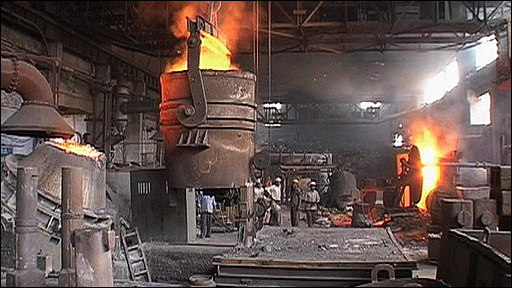
A scrap metal foundry.  source

Another aspect that further complicates the scrap contamination problems is size – the scrap metal market is worth over $140 billion1. With so much material in flux, an unreported contamination event can send radioactive material to unknowing manufacturers across the globe.  Although the US has stopped over 120 major radioactive shipments since 20032, there is ample evidence that radioactive scrap is still slipping through the cracks.  For example, a Texas recycling facility accidentally created 500,000 pounds of radioactive steel byproducts after melting metal contaminated with cesium-137 according to U.S. Nuclear Regulatory Commission records for 2006.

Scrap yards and recycling operations truly are the primary line of defense against rogue radiation but most of these facilities are under no specific federal government or state regulations and reporting is often voluntary if problems are found.

We’ve seen the results of contamination close at hand – at a recent visit to the nearby landfill, we were told that almost every load of scrap metal that comes in sets off radiation detectors and has to be scanned a second time.

To aid in this crucial detection stage of industry and commercial operations, D-tect Systems has designed several radiation detectors that are sensitive and easy to mount.  The Rad-D is currently being used in hospitals, factories, embassies, and waste disposal locations.  It can easily be mounted to scan conveyor belts and integrate with existing security systems.  The Rad-DX, D-tect’s newest product, is smaller and more visually innocuous.  The Rad-DX also has novel mesh-networking abilities that allow an operator to monitor multiple radiation detectors in real time or look at past event logs.   
The Rad-D is easily mounted to a wall or pole and monitors for radiation in real time.
  ____________________________________________________________________________
D-tect Systems is a supplier of advanced radiation and chemical detection equipment sold around the world. www.dtectsystems.com.

Tuesday, March 6, 2012

Immersed in a Sea of Radiation

You don’t have to look far to find radiation in the world around us. In fact, the vast majority of radiation that we are exposed to throughout our lives comes from natural sources. Naturally Occurring Radioactive Materials (NORM) are very common in the environment and can be found in many products in our homes and cars. These materials generally pose very little, if any threat to our health, and it may surprise you how many everyday items have radioactive properties.

This rock from southern Utah contains Thorium-232.
The most common NORM contain radioactive isotopes of uranium, thorium, and potassium, as well as the isotopes these decay into (such as radium and radon). Although  much of the earth’s surface contains very low concentrations of radioactive materials, NORM is concentrated in many raw industrial products and activities such as the following:
Coal: although other rocks in the earth’s crust have approximately the same concentration of NORM, the large quantities of coal needed to fuel much of the world’s energy demands are responsible for a sizable amount of radiation and a wide variety of isotopes including potassium, lead, and radium. An interesting fact about NORM in coal is that the naturally occurring uranium contained in coal could be a fuel source more powerful than the coal itself if used in a certain type of nuclear reactor1
Phosphate Rock: mainly used for fertilizers, phosphates can have much more concentrated amounts of NORM than other mining products. The radioactive content of phosphates has attracted media attention after European fertilizer manufacturing had been found responsible for radioactive material in the Atlantic.
Granite: this type of stone has traces of uranium in it, which means that many federal buildings such as the United States Capitol are faintly radioactive. We’ve found that the MiniRad-D (a small radiation detector) reads a constant radiation level of 2 around the perimeter of the Utah State Capitol, which has a granite facing on its exterior. Radiation measurements on granite surfaces can even show comparable levels to those from low-grade uranium mine tailings.
Oil and gas production: most of the radioactive material brought out of the ground in oil and gas production is deposited in pipes and other equipment. The concentration of NORM has made the resale of used equipment more difficult in recent years.
Although industrial activities are responsible for large amounts of NORM, many common household items also have significant amounts of radiation. Here are a few examples:
Smoke detectors: one of the most radioactive items in a home is the smoke detector, which uses an isotope of americium to sense the presence of airborne particles carried by smoke.
A small Americium-241 pellet from a smoke detector is contained in the plastic holder on top of the MiniRad-D device.

Ceramics: some of the most famous antique radioactive items are Fiesta Ware ceramics, which were produced from 1936-19432. The red glaze on these dishes contains Potassium-40, as do  the glazes of other ceramics with red, yellow, green, and black colors. The clay itself used in some ceramics can also contain NORM. Ceramic products such as bathroom tiles and porcelain can also show up on a radiation detector.
Cat litter: the main ingredient of cat litter is clay, which like that used in ceramics, often contains low levels of NORM.
Colored glass: uranium was commonly used as a coloring agent in yellow and green glass produced in the first half of the 20th century. You can find antique dinnerware, home décor, and even children’s marbles that emit a measurable amount of radiation.
These antique marbles contain trace amounts of uranium.

Glossy paper: Kaolin, a substance known as “white gold” for its versatility and value, was commonly used to create glossy paper on magazines in the early 1900s. Kaolin contains clay with low concentrations of uranium and thorium.
Instrument dials: due to its ability to fluoresce, radium was used in paint for marking instruments and watch dials. This paint exhibits a bright green color when fluorescing.
Spark plugs: dating back to 1940, some old spark plugs contain an isotope of polonium that was used to make a more brittle alloy that readily creates sparks.

Lantern Mantles: old Coleman lantern mantles contain low levels of Thorium-232, an isotope with a 14 billion year half-life. Special care should be used when dealing with used mantles to ensure the radioactive dust isn’t breathed in.
A Coleman lantern mantle with a MiniRad-D detector.

Food: many foods contain trace amounts of radiation, including potatoes, bananas, kidney beans, and Brazil nuts. Salt substitute, which contains potassium chloride instead of sodium chloride, may also have a low level of radiation due to the presence of Potassium-40.

1) http://www.world-nuclear.org/info/inf30.html

2) http://www.orau.org/ptp/collection/consumer%20products/consumer.htm


D-tect Systems is supplier of advanced radiation and chemical detection equipment sold around the world. www.dtectsystems.com.


Am I at Risk of Radiation Exposure?

The ongoing uncertainty of the Japanese nuclear crisis has left people around the world questioning the danger of radiation contamination in their own communities. How much is the general public really at risk of radiation? Because D-tect Systems specializes in detecting threats from radioactive and chemical sources, we offer this article to provide some information on some of the current radiation risks in context and some general guidelines on radiation safety.

The first step in qualifying contamination risks is to separate fact from fiction. The way the public views radiation has mostly been shaped by a few incidents in modern history: Chernobyl and Hiroshima/Nagasaki. These extreme cases have influenced many to assume that radiation is an exotic and deadly phenomenon. In reality, our environment is steeped in radiation that our bodies absorb without any ill effect. The most important factor in understanding the impact of radiation is quantity – how high radiation levels are and how these levels translate to risk.

To give some idea of safe radiation levels, natural background radiation – the radiation that we are exposed to every day from cosmic rays and naturally-occurring radioactive materials – is about 3 mSv (300 mrem) per year. According to the FAA, A coast-to-coast airplane trip will expose you to about 5 µSv per hour (which comes out to 43.8 mSv/yr for continuous flight), and a year of watching four hours of television of day adds up to about 20 µSv total (2 mrem). These quantities are pretty small compared to a federal occupational limit of radiation exposure set by OSHA at 50 mSv (5000 mrem) per year. Now let’s compare the situation in Japan to all this. Recent reports from the International Atomic Energy Agency stated that radiation levels at the perimeter of the Fukushima Daiichi nuclear complex have been measured at 1 – 3 mSv/hr. Although this is an elevated radiation level and prolonged exposure could be dangerous, the short-term radiation level set for Japanese workers working on the nuclear complex is 250 mSv, and would take considerable time to reach.

Although the risks of serious widespread radiation contamination in this case are low, the procedures outlined by government agencies should always be strictly adhered to. These procedures aim to limit the spread of radiation and minimize risk to exposed areas. Although the specific instructions given out for each incident vary, here are a few general guidelines that should always be followed.

First, in case of radiation contamination, get people (including yourself) out of harm’s way as quickly as possible and notify authorities. Radiation spreads easily though blowing dust and smoke, so radiation-free secure zones must be established by sealing off areas from the outside environment by closing and weather-proofing doors and windows and placing food and water in well-insulated areas such as basements.

Second, since human skin generally acts a good barrier against low-level radiation, the biggest threat is breathing in radioactive materials or somehow ingesting them. Make sure to wear a face mask in areas that may be contaminated and wash hands regularly. If you suspect someone has been exposed to radioactive dust, the best solution is usually as simple as discarding contaminated clothing and washing with soap and water, as this will rid the body of radiation before it can cause damage. As an additional precaution against significant amounts of radiation, potassium iodide tablets are sometimes given to protect the thyroid gland.

Third, preparation is vital when it comes to any kind of disaster, and we recommend everyone keep an emergency kit close at hand so that they can be personally prepared in case of any crisis. This kit should include such things as food and water for a few days, water filtration kit, emergency blanket, rain gear, batteries for radios and detectors, dust mask, extra clothing, flashlight, candles, waterproof matches, cooking utensils, necessary medications, and a first aid kit. Although we generally take these supplies for granted, shortages can occur quickly in crisis situations.

Preparation is vital when it comes to any kind of disaster, and we recommend all public safety personnel keep an emergency kit close at hand so that they can be personally prepared to serve the public. This kit should include such things as food and water for a few days, emergency blanket, rain gear, batteries for radios and detectors, dust mask, extra clothing, candles, waterproof matches, cooking utensils, necessary medications, and a first aid kit. Although we generally take these supplies for granted, shortages can occur quickly in crisis situations.

Although the current nuclear crisis continues to make headlines and is a great source of fear for many, it is important to know the real risks involved and how to cope with them. With a little knowledge of radiation safety, and material preparation for a crisis, we can minimize future risks and know better what we’re up against.

D-tect Systems is supplier of advanced radiation and chemical detection equipment sold around the world. www.dtectsystems.com.